
Liu Duo: Make Shanghai Shine as an S&T Center Release time: 2022-08-22Source: SCIENCE AND TECHNOLOGY COMMISSION OF SHANGHAI MUNICIPALITY
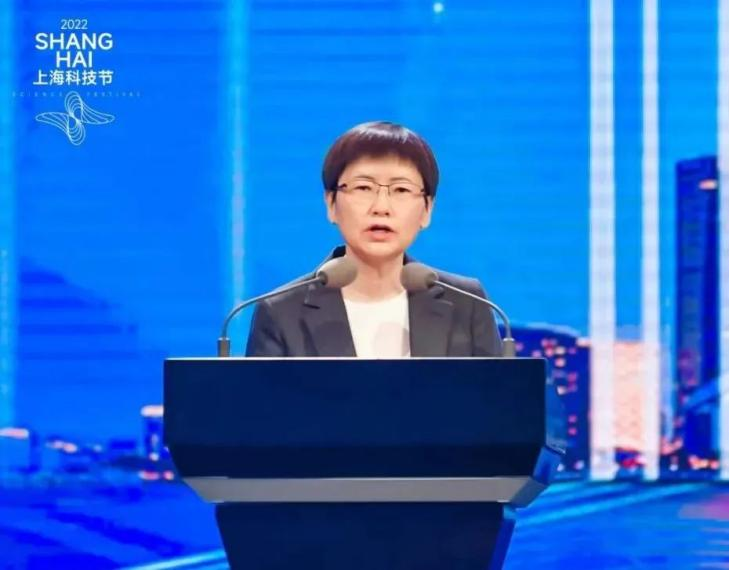
“From Xu Guangqi’s translation of the Elements of Geometry to the establishment of the Science Society of China in Shanghai, from the mass production of penicillin to the birth of synthetic bovine insulin, technology has always been a dominant gene of Shanghai in the process of modernization.”
Ms. Liu Duo, deputy mayor of Shanghai, said at the first Shanghai Science Communication Conference on August 20 that citizens’ scientific literacy is increasingly important for a city’s competitiveness and vowed to turn Shanghai into a better-known science and technology (S&T) center.
Shanghai has always attached great importance to the popularization of science and has achieved remarkable results.
According to Ms. Liu Duo, Shanghai has established 285 municipal bases for popularizing science, like the Shanghai Science & Technology Museum, and 29 sci-tech innovation workstations for youths, leading the world with one sector for every 80,000 people on average. The proportion of Shanghai citizens with scientific literacy has reached 24.3%, ranking first in China. The Shanghai Science Festival, China’s first and the world’s second government-sponsored science festival, has gradually become a major event demonstrating the city’s strength in sci-tech innovation.
Today, the means of communication are constantly changing. In addition, the wide application of new media technologies and approaches has profoundly transformed how the public access information. As a result, pinpointing new paths for talent training and theoretical research and creating new models of market-oriented development that integrate science popularization with technological innovation and cultural tourism has posed new challenges to science popularization.
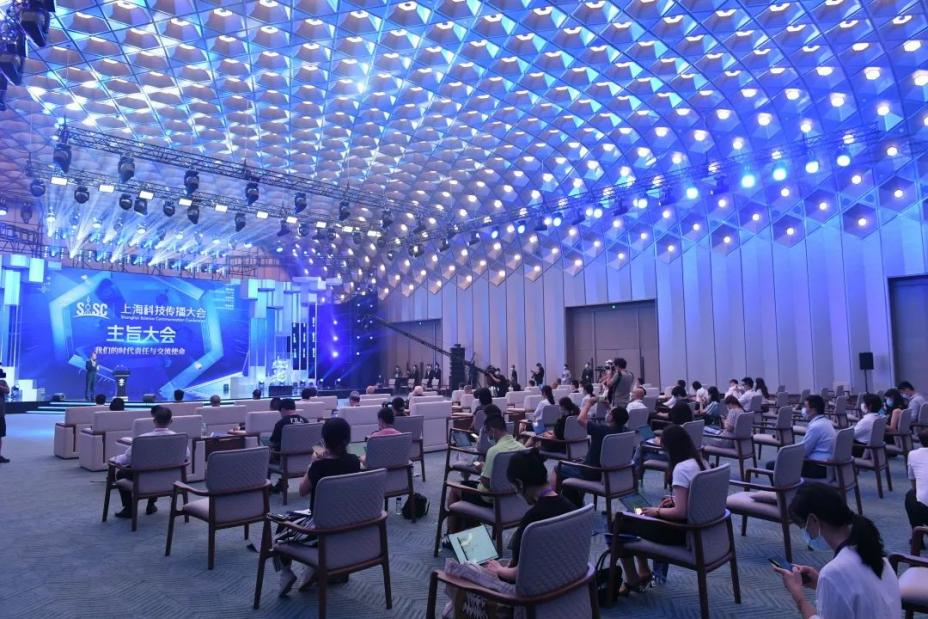
Ms. Liu Duo proposed three ways to address such challenges. First, more platforms should be built. We should set up high-caliber science popularization venues, improve their functions based on metaverse and artificial intelligence, and display scientific and technological innovation achievements there. We should make science popularization a function of public cultural facilities such as cultural centers and libraries and encourage enterprises, public institutions, and social groups to build a number of facilities with industrial or disciplinary features in light of local conditions. Taking into consideration regional industries, culture and education, and natural resources, we should also create resource pools and supply platforms with distinctive regional characteristics and themes for science popularization.
Second, professional support should be provided. We should build a professional science popularization team with modern theories and communication skills. Science popularization personnel should be incorporated in talent rewards and training programs at all levels, and qualified universities should be supported to develop science and technology communication disciplines to endorse talent cultivation and theoretical research. We should encourage research institutes, schools, enterprises, and social organizations to take an active part in science popularization and foster a group of professional agencies to meet the people’s growing demand for quality, customized, and personalized science popularization services.
Third, an international perspective should be adopted. We should introduce quality resources in science popularization while going international. For example, we should hold events like the Shanghai Science Communication Conference and introduce top-notch foreign scientists and science communication agencies to offer Shanghai citizens different experiences. In addition, we should coordinate domestic resources, increase the supply of quality products and services in line with international standards, and carry out regular international exchanges in science communication, to enhance Shanghai’s global influence in science popularization.
Ms. Liu Duo said that holding the Shanghai Science Communication Conference is a major step taken by Shanghai to implement President Xi Jinping’s directive to advance science popularization and technological innovation as “two wings.” It is also an active attempt to better demonstrate the city’s sci-tech innovation efforts and build a new platform for sci-tech communication and exchange as Shanghai picks up speed in growing into a sci-tech innovation center with global influence.
